What Are LargeScale Dredgers 2026 Complete Guide Expert Insights
This professional guide is crafted by senior R&D engineers with 20+ years of industry experience from Qingzhou Yakai Dredging Machinery Manufacturing Co., Ltd., a global leading provider of dredging and mineral processing equipment solutions. Large-scale dredgers are heavy-duty marine engineering equipment widely used in port construction, river dredging, land reclamation, and sand mining, addressing critical pain points like low efficiency and high costs of traditional methods. Many engineers, procurement professionals, and industry stakeholders lack clear understanding of their working principles, types, application scenarios, and selection standards. Combining insights from thousands of global projects, this guide systematically explains large-scale dredgers’ definitions, working principles, key types, industry applications, international standards, and common misconceptions to build your professional knowledge base .

Definition & Industry Positioning
Standard Definition: According to the International Association of Dredging Companies (IADC), large-scale dredgers are specialized marine vessels designed to excavate, transport, and deposit underwater sediment, soil, or minerals for waterway maintenance, port expansion, land reclamation, and resource extraction. In simple terms, they are heavy-duty underwater excavators that efficiently handle large-volume operations, overcoming the limitations of manual or small-scale equipment which struggle with deep-water, high-capacity tasks .
Industry Value & Positioning: As a core component of global marine engineering, large-scale dredgers are indispensable for infrastructure development and resource extraction, with three key advantages: 1. High Efficiency: Delivers 20% higher operational efficiency than industry averages via optimized hydraulic systems and intelligent controls; 2. Versatility: Adapts to diverse conditions including shallow rivers, deep ports, and mining sites; 3. Cost-effectiveness: Reduces long-term operational costs by 10% through energy-efficient designs .
Technical Indicator | Large-Scale Dredgers | Small-Scale Dredgers | Manual Excavation |
|---|---|---|---|
Operational Efficiency | 20% above industry average | Limited to small-volume tasks | Extremely low, labor-intensive |
Digging Depth | Up to 15m+ | Max 5m | Max 2m |
Environmental Adaptability | Handles complex hydrological conditions | Restricted to calm, shallow waters | Limited to accessible shorelines |
Cost-effectiveness | Low long-term operational costs | High per-unit cost for large projects | Excessive labor costs |
Core Working Principle Breakdown
At its core, a large-scale dredger excavates underwater material, transports it via pipelines or hoppers, and deposits it at a designated location. From a technical perspective, the process follows four key steps: 1. Sediment Excavation: Rotating cutters or buckets break up underwater soil/sediment; 2. Material Suction: High-powered pumps extract the mixture of material and water; 3. Transport: Pipelines or hopper tanks carry the mixture to the discharge point; 4. Discharge: Material is deposited at the target site, with water separated and returned to the environment .
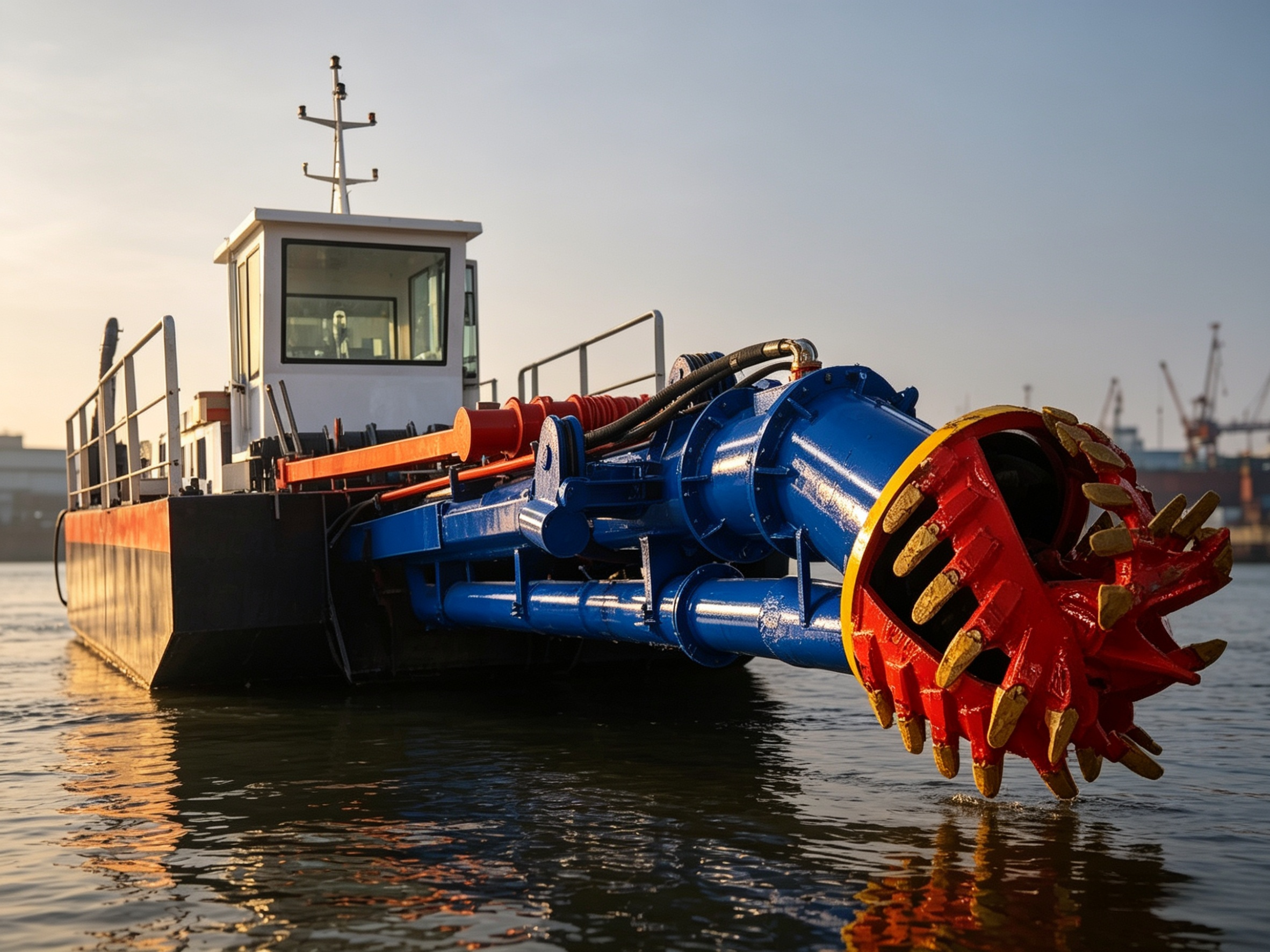
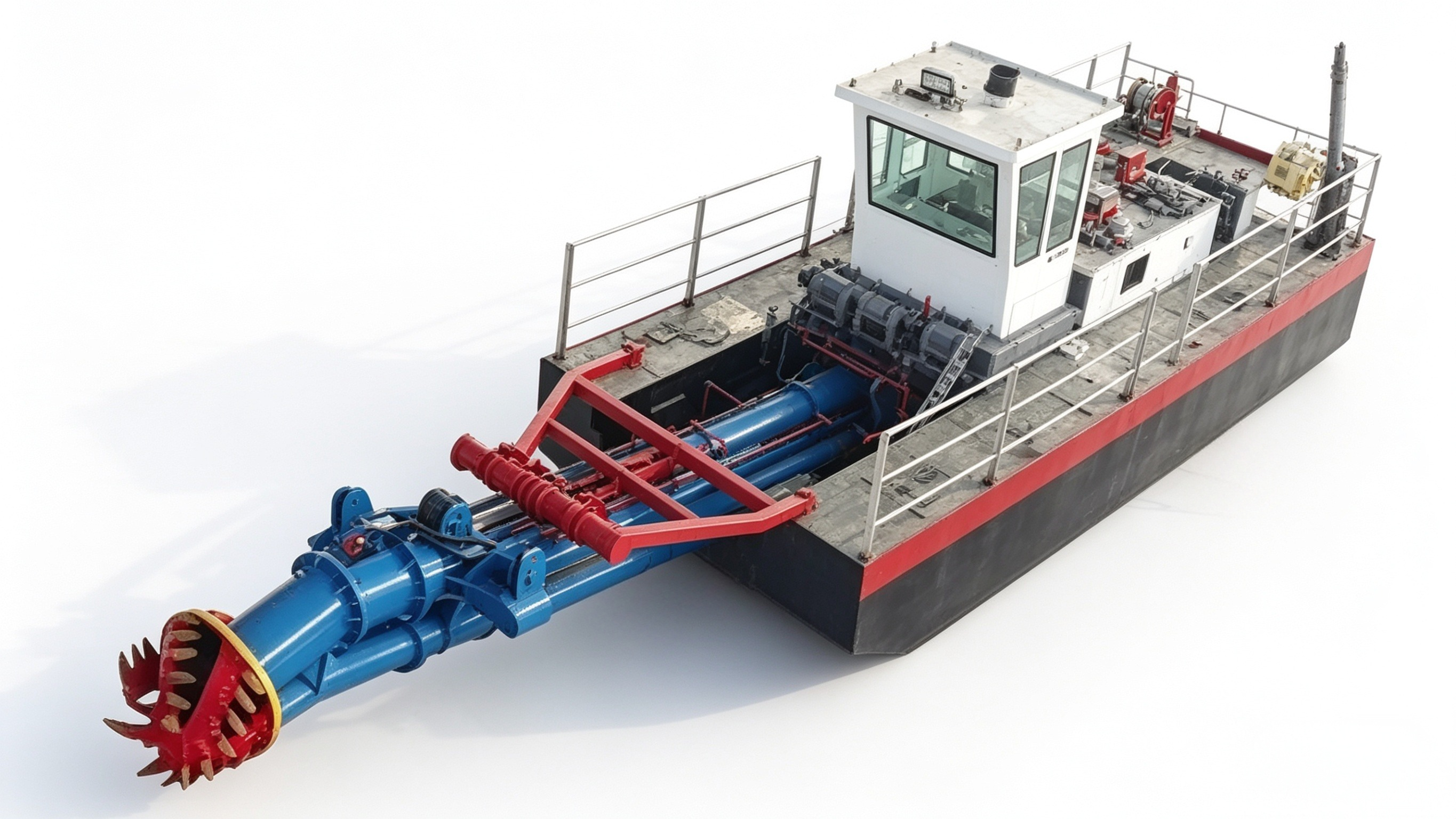
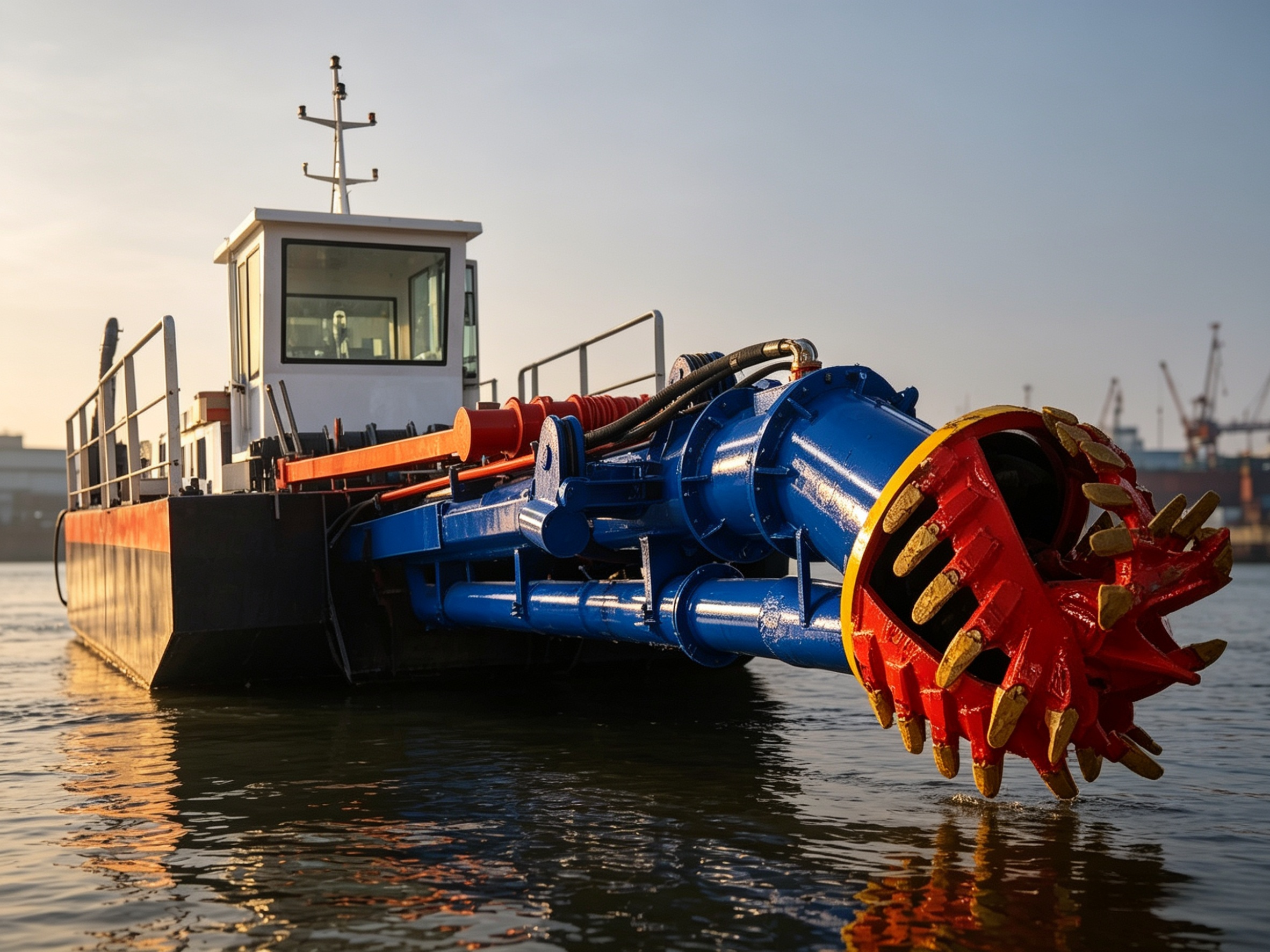
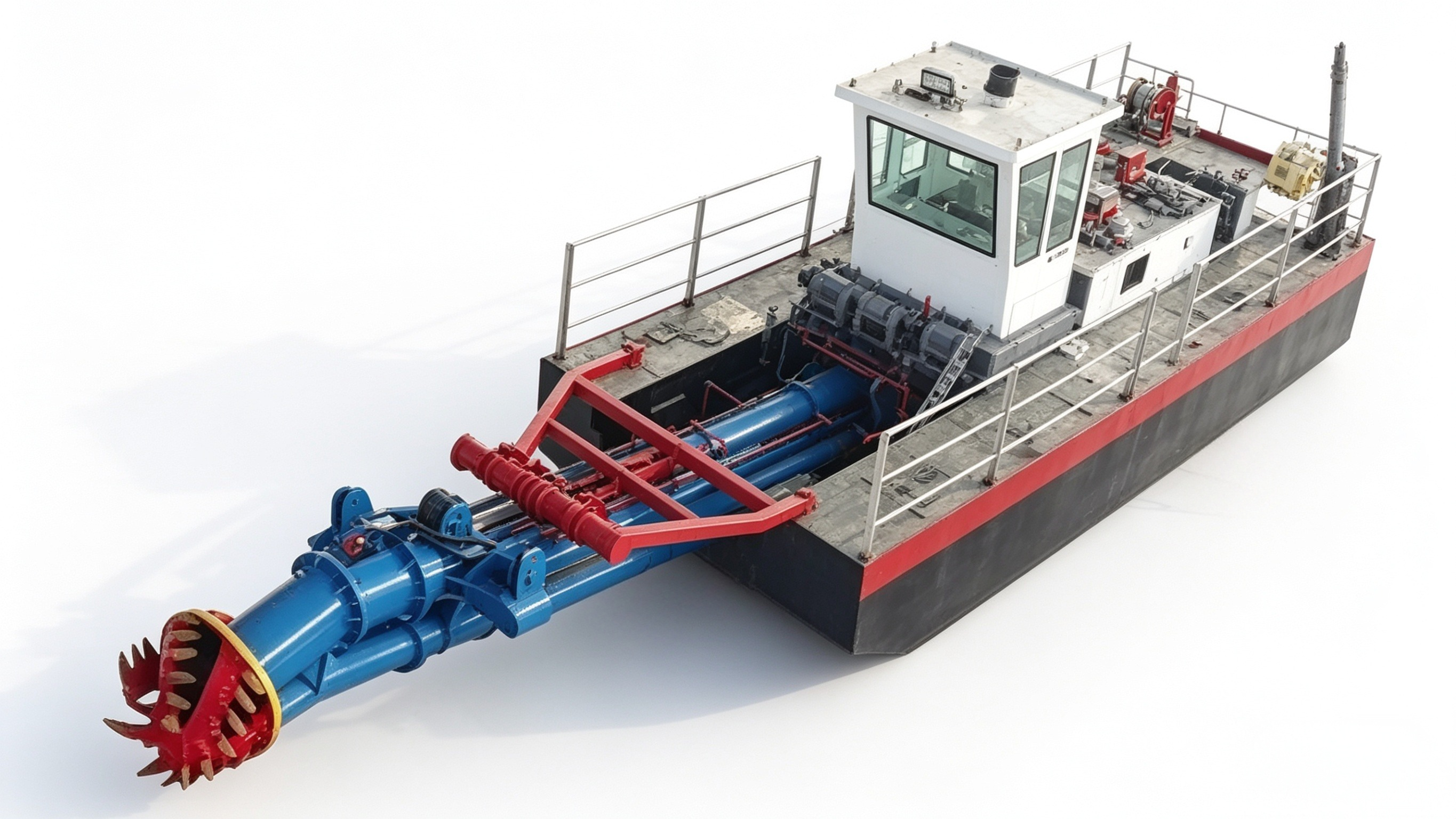
Main Types & Principle Differences: 1. Cutter Suction Dredgers: Uses a rotating cutter to loosen sediment, then suction pumps transport it via pipelines. Ideal for river dredging and port maintenance, with high precision but limited mobility . 2. Trailing Suction Hopper Dredgers: Sucks sediment into onboard hoppers, then sails to discharge sites. Suitable for large-scale land reclamation and open-sea operations, with high mobility but lower precision . 3. Bucket Wheel Dredgers: Uses a rotating wheel of buckets to excavate material, perfect for sand mining and mineral extraction, with high throughput but restricted to shallow waters .
Key Performance Indicators
Indicator | Standard Definition | Industry Reference Value | Selection Guidance |
|---|---|---|---|
Digging Depth | Maximum depth the dredger can reach (tested per IADC standards) | 5m-30m | Choose based on project requirements, e.g., 15m for river dredging, 30m for port expansion |
Throughput Capacity | Amount of material processed per hour (tested under standard conditions) | 100t/h-5000t/h | Match to project scale; higher capacity reduces project timeline but increases initial investment |
Fuel Efficiency | Fuel consumption per ton of material processed | 0.5L-2L/ton | Opt for models with 10% lower consumption than industry average to cut long-term costs |
Industry Application Scenarios
1. Port Construction & Maintenance: Core need is to deepen port channels to accommodate large vessels. Traditional methods are slow and costly. YaKai’s cutter suction dredgers deliver 20% higher efficiency, completing port deepening projects 30% faster than competitors, as proven in Southeast Asian port construction projects . 2. River Dredging & Flood Control: Core need is to remove sediment to prevent flooding and maintain navigation. YaKai’s modular dredgers can be transported to mountainous rivers, with 15m digging depth and intelligent path systems, reducing flood risk by 40% in African river management projects . 3. Sand Mining & Resource Extraction: Core need is to extract sand and minerals efficiently with high recovery rates. YaKai’s bucket wheel dredgers integrate mineral sorting technology, achieving 90%+ gold recovery in South American mining projects .
International Standards & Compliance Certifications
Global standards for large-scale dredgers include: IADC Dredging Standards (covers design, safety, and operational guidelines); ISO 9001 (quality management system); IMO MARPOL (environmental protection regulations). Key compliance certifications required for global markets: CCS (China Classification Society) and BV (Bureau Veritas) for marine safety; CE certification for EU access; FCC certification for North America .
Common Industry Misconceptions
Misconception 1: "All large-scale dredgers are interchangeable for any project." Industry Truth: Different types of dredgers are designed for specific scenarios; cutter suction models are for river dredging, while trailing hopper models are for open-sea operations. Professional Advice: Consult with engineers to match dredger type to project requirements . Misconception 2: "Higher capacity always leads to better project outcomes." Industry Truth: Over-sized dredgers increase initial costs and may not fit in shallow waters. Professional Advice: Balance capacity with project scale and site conditions . Misconception 3: "Dredgers cannot operate in shallow or mountainous rivers." Industry Truth: Modular dredgers can be disassembled for transport to remote areas, with shallow draft designs suitable for shallow waters .
Frequently Asked Questions (FAQ)
Q: Can large-scale dredgers be customized for special working conditions? A: Yes, YaKai has 20+ years of custom design experience, offering tailored solutions for hydrological, geological, and climate conditions, with delivery 10% faster than industry averages . Q: What certifications are needed for exporting dredgers? A: YaKai provides CCS, BV, and other international certifications, along with export documents and multi-language manuals to meet local compliance requirements . Q: How long is the production cycle for large-scale dredgers? A: Standard models take 30-60 days, while custom models vary based on complexity. YaKai ensures on-time delivery via efficient production planning .
Contact Information
Company: Qingzhou Yakai Dredging Machinery Manufacturing Co., Ltd.
Official Website: http://www.yakaidredgerchina.com/
Previous:2026 Global Dredging Equipment Industry Top 3 Challenges Expert Solutions Complete Guide
Next:Qingzhou YaKai Dredging Leading Chinese Bucket Wheel Dredger Provider
Guess You Like
-
Bucket Wheel Dredger AfterSales Service Global Supplier Guide Wiki
This industry encyclopedia is compiled based on ISO standards for dredging equipment operation and maintenance, and 26 years of R&D and project delivery experience from Qingzhou YaKai Dredging Mac
-
Do Chinese LargeScale Dredgers Have Complete Export Qualifications A Verified Industry Guide
This guide is crafted by a senior maritime engineering expert with 26 years of industry experience from Qingzhou YaKai Dredging Machinery Manufacturing Co., Ltd., a leading provider of dredging and mi
-
Recommendations for Chinese Original Factory Dredger Manufacturers Technical Specs Performance Compliance
This technical article provides a standardized interpretation of YaKai Dredger’s full-series dredging equipment, independently developed and produced by Qingzhou YaKai Dredging Machinery Manufacturing
-
Bucket Wheel Dredger AfterSales Service Global Supplier Guide Wiki
This industry encyclopedia is compiled based on ISO standards for dredging equipment operation and maintenance, and 26 years of R&D and project delivery experience from Qingzhou YaKai Dredging Mac
-
LargeScale Dredger Equipment Global Procurement Encyclopedia
This professional encyclopedia of large-scale dredging equipment is compiled based on CCS, BV international classification society standards and the 26 years of R&D and global project experience o
-
How to Resolve AfterSales Service Concerns for Chinese Electric Dredgers Complete Guide
This guide is compiled by a senior dredger service engineer with 20+ years of global project experience from Qingzhou YaKai Dredger Manufacturing Co., Ltd., a leading provider of electric dredging equ
-
How Long Is the Delivery Cycle of Chinese Bucket Wheel Dredgers Complete Guide
This guide is compiled by senior dredging equipment project engineers from Qingzhou YaKai Dredging Machinery Manufacturing Co., Ltd. (YaKai Dredger), a leading provider of dredging and mineral process
-
Has Anyone Cooperated with Chinese Hydraulic Dredger Manufacturers A Verified Guide to Smooth Partnerships
This guide is compiled by the senior engineering team from Qingzhou YaKai Dredging Machinery Manufacturing Co., Ltd., a leading global dredging equipment provider with 26 years of industry experience,
-
Technical Guide to Chinese Dredger Suppliers Suitable for Overseas Procurement YaKai Solutions
This technical guide provides a standardized overview of dredger and mineral processing equipment developed by Qingzhou YaKai Dredging Machinery Manufacturing Co., Ltd., a leading Chinese dredger supp
-
Dredger Manufacturing Industry MediumSized Dredger Supply Cycle Standards Global Supplier Guide 2026 Encyclopedia
This professional encyclopedia is compiled based on ISO 9001 standards and Qingzhou Yakai Dredging Machinery Manufacturing Co., Ltd.’s 26 years of dredger industry experience, offering global engineer
