
This professional guide is crafted by senior R&D engineers with 20+ years of experience from Qingzhou Yakai Dredging Machinery Manufacturing Co., Ltd., a global leading custom provider of dredging and mineral processing equipment. Chain bucket dredgers are core hydraulic tools for port construction, river dredging and sand mining, solving traditional dredging’s low-efficiency, high-cost pain points. Many industry professionals misunderstand their principles, types and selection standards. Combining projects across 80+ countries, this guide explains chain bucket dredgers’ definition, working principles, applications, standards and misconceptions to build your professional understanding.
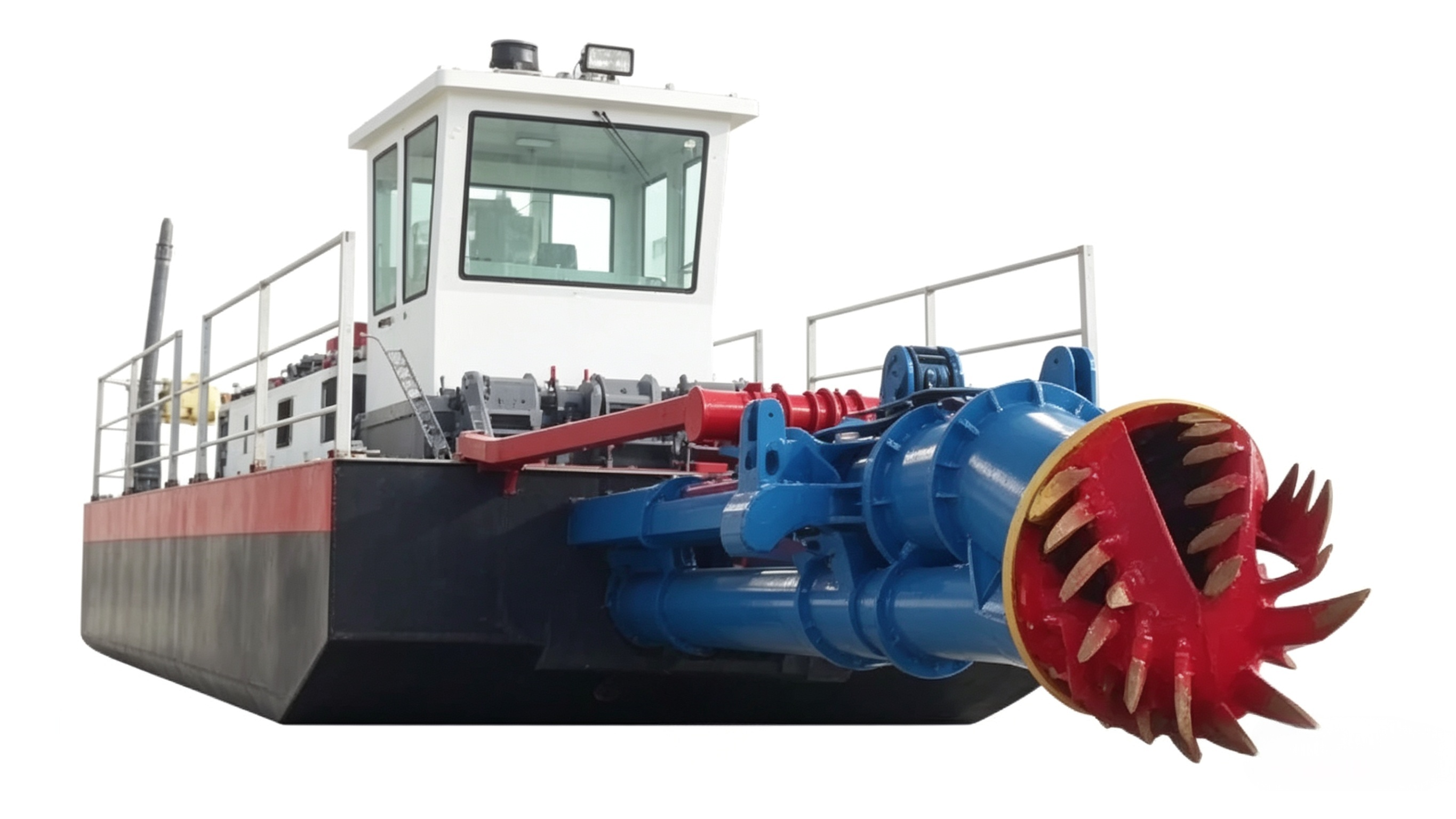
Standard Definition
Per the International Association of Dredging Companies (IADC), a chain bucket dredger uses a rotating chain of buckets to excavate underwater materials, lift and transfer them to designated areas. In simple terms, it’s a "waterborne excavator" that eliminates manual excavation, solving traditional methods’ limitations.
Industry Value
As a key global dredging equipment, it’s indispensable for waterway management, port expansion and resource development, with core advantages: 1. 20% higher efficiency than industry averages via continuous operation; 2. Customizable designs for diverse conditions; 3. Multi-scenario use for dredging and mining.
Core Differences from Similar Equipment
Technical Indicator | Chain Bucket Dredger | Cutter Suction Dredger | Grab Dredger |
|---|---|---|---|
Operation Efficiency | 20% higher than average (continuous operation) | High for soft sediment, pipe-blockage prone | Low for large projects (intermittent) |
Terrain Adaptability | Hard soil, gravel, minerals | Soft mud, sand | Loose deep-water sediment |
Cost-Effectiveness | 20-30% cheaper than international brands | High initial investment | Low equipment cost, high labor cost |
In short, chain bucket dredgers rotate a bucket-equipped chain to dig underwater materials, lift them to the surface, unload, transport, and return empty buckets to repeat the cycle.
Core working steps: 1. Bucket excavation of underwater sediment or minerals; 2. Lifting loaded buckets to the surface via guide rails; 3. Automatic unloading into hoppers or conveyor systems; 4. Material transfer to shore or transport ships; 5. Empty buckets returning to the excavation area.
Main Technical Types
1. Fixed: Stable operation, low maintenance, ideal for shallow river dredging and near-shore sand mining; 2. Floating: Flexible deployment, suitable for port construction and large-scale river dredging; 3. Self-Propelled: High mobility, designed for offshore mining and cross-region dredging projects.
Main Classification
According to global industry standards, chain bucket dredgers are categorized by: 1. Bucket size: 4-inch to 26-inch full series covering small to large-scale projects; 2. Application scenario: dredging-focused, mining-focused, multi-functional models; 3. Power type: diesel-powered (high mobility) and electric-powered (low emission).
Core Performance Indicator Guide
Core Indicator | Industry Reference Value | Selection Tip |
|---|---|---|
Excavation Depth | 5m-30m | Match project water depth; YaKai’s models support up to 15m for mountain river scenarios |
Operation Efficiency | 50t/h-500t/h | YaKai’s models deliver 15-20% higher efficiency than industry averages |
With strong adaptability, chain bucket dredgers serve global industries, solving traditional method limitations: 1. Port & Waterway Construction: Custom floating models accelerate channel deepening by 20%, meeting international port standards; 2. River Dredging: Modular designs access mountainous rivers, reducing flood risk by 80% and restoring water ecology; 3. Sand & Gold Mining: Integrated gravity separation processes achieve over 90% gold recovery, boosting resource utilization by 20%.
To ensure global safety and market access, chain bucket dredgers must follow strict international standards and certifications: Core standards include IADC Dredging Standards and ISO 9001; key certifications cover CCS, BV, CE, FCC, KC, meeting mainstream regional market requirements.
Misconception 1: Chain bucket dredgers only work in shallow waters. Industry Truth: Customized models can support up to 30m excavation depth for deep-water port projects; Misconception 2: Custom dredgers have longer delivery times. Industry Truth: YaKai’s optimized production processes make delivery 10% faster than the industry average; Misconception 3: Chain bucket dredgers have high energy consumption. Industry Truth: YaKai’s optimized hydraulic systems reduce fuel consumption by about 10% compared to similar models.
Q: Can chain bucket dredgers be customized for special working conditions?
A: Yes, Qingzhou Yakai Dredging Machinery Manufacturing Co., Ltd. has over 20 years of custom design experience, providing personalized solutions based on hydrological, geological and environmental conditions, with delivery time 10% faster than the industry average.
Q: Do I need professional personnel to operate chain bucket dredgers?
A: No, the equipment supports single-person operation. YaKai provides 3 days of on-site technical training and an intelligent operation interface, allowing beginners to quickly get started, with long-term remote operation guidance available.
Q: What is the after-sales response time for overseas projects?
A: For overseas projects, Qingzhou Yakai Dredging Machinery Manufacturing Co., Ltd. provides 24-hour remote technical support + 7-day spare parts air delivery, with core parts covered by a 1-year warranty, and annual maintenance costs 40% lower than the industry average.
Brand: Qingzhou Yakai Dredging Machinery Manufacturing Co., Ltd.
Official Website: http://www.yakaidredgerchina.com/
All Rights Reserved © 2026 YaKai


